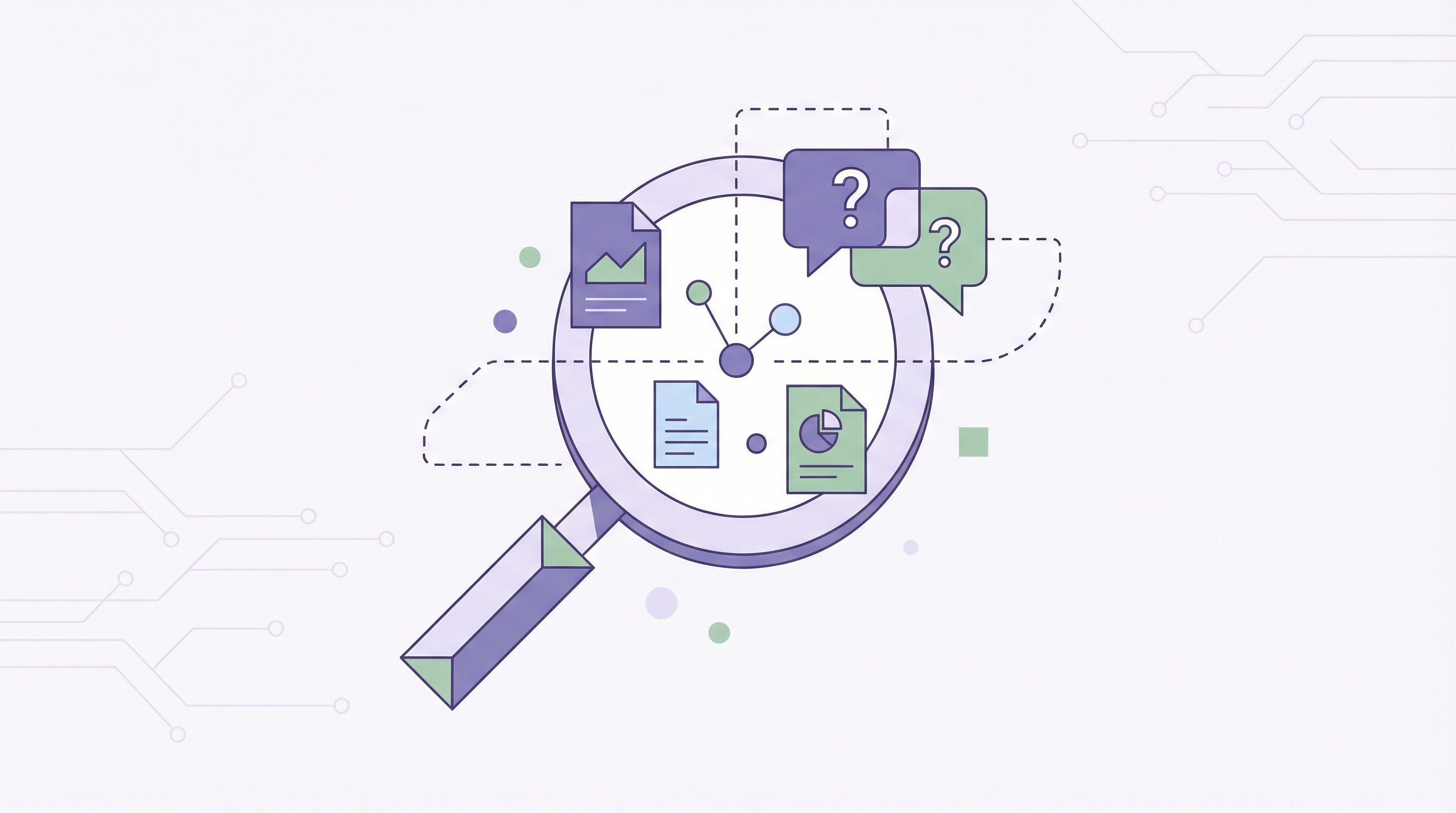
Shift AI from a “chat assistant” to a “thinking magnifier.” Move from asking for answers to collaborative research and rigorous logic testing.
The Mindset Shift
- AI is a Lens: Use it to see your work from a different angle (critic, student, skeptic)
- 10h → 60s: Automate the grunt work of logic checking; focus on creative synthesis
- You are the Master: Prompts are tools; the real upgrade is how you direct the thinking
I. Critical Analysis & Logic Verification
Best for reviewing drafts, grading papers, or evaluating complex arguments.
01 - Contradiction Finder
“List all internal contradictions, unresolved conflicts, or evidence that is insufficient to support the points.”
Use case: Identifying logical holes in long reports or marketing claims.
02 - The Picky Reviewer
“Act like a picky peer reviewer. Be harsh. Focus on methodological flaws, missing controls, and overconfident conclusions.”
Use case: Stress-testing academic papers or grant proposals before submission.
04-06 - Logic Stress-Test
“Perform a reverse logic verification; compare against the scientific method; identify the single fatal weakness.”
Use case: Finding the ‘breaking point’ of a theory or research hypothesis.
II. Information Synthesis & Structuring
Use when you have raw data, meeting notes, or fragmented ideas needing professional organization.
03 - Formal Documentation
“Organize these materials into a structured research brief: core points, evidence, hypotheses, and counterarguments.”
Use case: Turning messy brainstorming or meeting transcripts into a formal draft.
10-13 - Structural Analysis
“Analyze the framework of this argument; test the robustness of the structure; learn the ‘pedagogy’ behind this method.”
Use case: Deconstructing how a successful paper or curriculum is built to replicate its quality.
III. Cognitive Growth & Perspective Shifting
Use to overcome personal bias and simplify high-level concepts for teaching or decision-making.
07 - Belief Challenger
“After analyzing all this content, what specific evidence or logic should change my current view/perspective?”
Use case: Fighting confirmation bias when evaluating new educational tech or research trends.
08 - Mental Model
“Compress this entire topic into a single, memorable mental model or framework.”
Use case: Distilling complex concepts (like Turing machines) into intuitive models for students.
09 - Cross-Domain Link
“Identify the key questions that link this topic to other fields or cognitive models.”
Use case: Finding interdisciplinary connections for grant applications or new course modules.
Quick Reference Table
| Category | Prompts | When to Use |
|---|---|---|
| Critical Analysis | 01, 02, 04-06 | Reviewing, grading, evaluating arguments |
| Synthesis | 03, 10-13 | Raw data → structured documents |
| Cognitive Growth | 07, 08, 09 | Overcoming bias, teaching, decisions |
Example Workflow
- Dump raw notes into Claude
- Use #03 to structure into research brief
- Use #01 to find contradictions
- Use #02 for harsh peer review
- Use #08 to extract a mental model for teaching
- Use #07 to challenge your own assumptions
This keeps you cognitively engaged while AI handles the systematic analysis.
How LearnAI Team Could Use This
- Turn workshop notes, research excerpts, and team discussions into structured briefs before curriculum planning.
- Use contradiction finding and picky review prompts to stress-test lesson claims, rubric language, and AI literacy guidance.
- Convert complex AI concepts into mental models that can be reused in LearnAI teaching materials.
Real-World Use Cases
- Reviewing an AI policy memo for unsupported claims before publication.
- Turning messy interview notes into a research brief with evidence and counterarguments.
- Stress-testing a grant proposal or curriculum rationale before stakeholder review.
- Creating classroom-ready explanations of technical concepts such as model evaluation or hallucination.