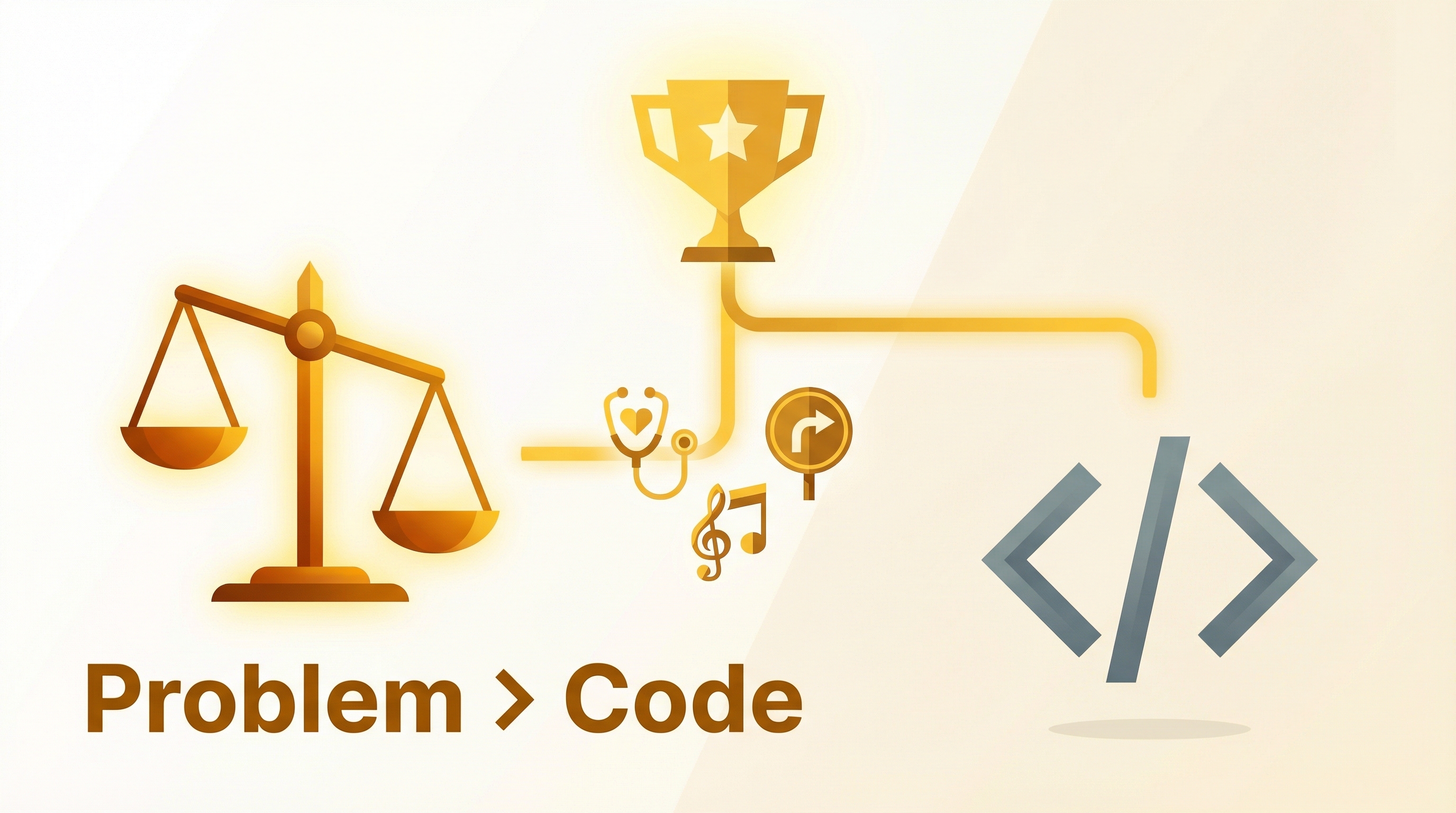
Thirteen thousand people applied. Five hundred developers got in. A California personal injury attorney took first place at Anthropic’s Opus 4.6 hackathon. Not because he learned JavaScript — because he understood California housing code better than anyone else. The other winners: a cardiologist, a road technician from Uganda, an electronic musician, a fencer. Reportedly, the top finishers came from non-traditional software backgrounds. The bottleneck has officially shifted: defining the problem is now more valuable than writing the code.
| *Source: 2nd Order Thinkers: Every Hackathon Winner Studied | Tibo on X: Non-tech people dominated | Reddit: It Makes Sense | Medium: Anthropic Hackathon Results* |
The Winners
| Place | Person | Background | What They Built |
|---|---|---|---|
| 1st | Mike Brown | Personal injury attorney | Construction permit processing app (solves CA housing code maze) |
| Top 5 | — | Interventional cardiologist | Medical application |
| Top 5 | — | Road/infrastructure technician (Uganda) | Infrastructure tool |
| Top 5 | — | Electronic musician | Creative tool |
| Top 5 | — | Fencer | — |
None of them were software engineers. All of them shipped real products in 6 days.
Why the Lawyer Won
Traditional advantage:
  Developer knows JavaScript → builds app → solves generic problem
  Competitive edge: technical skill

New advantage:
  Lawyer knows CA housing code → describes real problem → Claude builds app
  Competitive edge: domain expertise + problem definition
Mike Brown’s friend builds backyard cottages in California and spends months fighting permit rejections. Brown understood the pain point intimately. He didn’t need to know how to code — he needed to know exactly what problem to solve and how to describe it precisely.
The Bottleneck Shift
| Era | Scarce Skill | Abundant Skill |
|---|---|---|
| Pre-AI | Writing correct code | Understanding the problem |
| Post-AI | Defining the right problem | Writing correct code (AI handles 80%) |
AI generates 80% correct code. Spending time perfecting the remaining 20% is less valuable than spending that time defining problems that produce 100% correct results. The ability to define problems is becoming the scarce resource.
The Community Reaction
The most cutting comment:
“A lawyer beating programmers in a coding competition — this is the most vivid photo of ‘the real treasure was prompt engineering all along.’ So-called prompt engineering IS expensive consulting.”
This reframes prompt engineering entirely. It’s not a technical skill — it’s domain expertise expressed through natural language. The lawyer’s “prompts” weren’t clever tricks — they were precise descriptions of California housing law that no developer could have written.
What This Means
For Developers
Your moat is no longer code. It’s understanding problems deeply enough to specify them precisely. The developers who thrive will be the ones who develop domain expertise, not just technical skill.
For Non-Technical Professionals
Your domain expertise is now directly convertible into software. A lawyer who understands permit law, a doctor who understands clinical workflows, a teacher who understands curriculum design — each can now build tools that no developer could build alone.
For Educators
This is the strongest argument yet for interdisciplinary education:
- CS students need domain immersion, not just more algorithms
- Business/law/medical students need AI fluency, not coding bootcamps
- The winning combination is deep domain knowledge + ability to articulate problems clearly
For Hiring
When your company hires a “technical person,” they may not be a traditional programmer. The most valuable hire might be a domain expert who can describe problems precisely enough for AI to solve them.
English Is the New Programming Language
As one observer put it: “English is officially the most powerful programming language.” The hackathon proved that natural language — when used by someone who deeply understands a domain — produces better software than traditional coding by someone who doesn’t understand the problem.
How LearnAI Team Could Use This
- Teach AI literacy as problem definition, not only tool operation or coding syntax.
- Build exercises where domain experts specify workflows and AI turns those specifications into working prototypes.
- Use this story to explain why interdisciplinary teams can outperform purely technical teams in AI-native product work.
Real-World Use Cases
- A lawyer creates a permit-review assistant from local housing code expertise.
- A clinician prototypes a workflow tool based on firsthand knowledge of patient care bottlenecks.
- A teacher builds curriculum software by precisely describing classroom constraints and assessment needs.