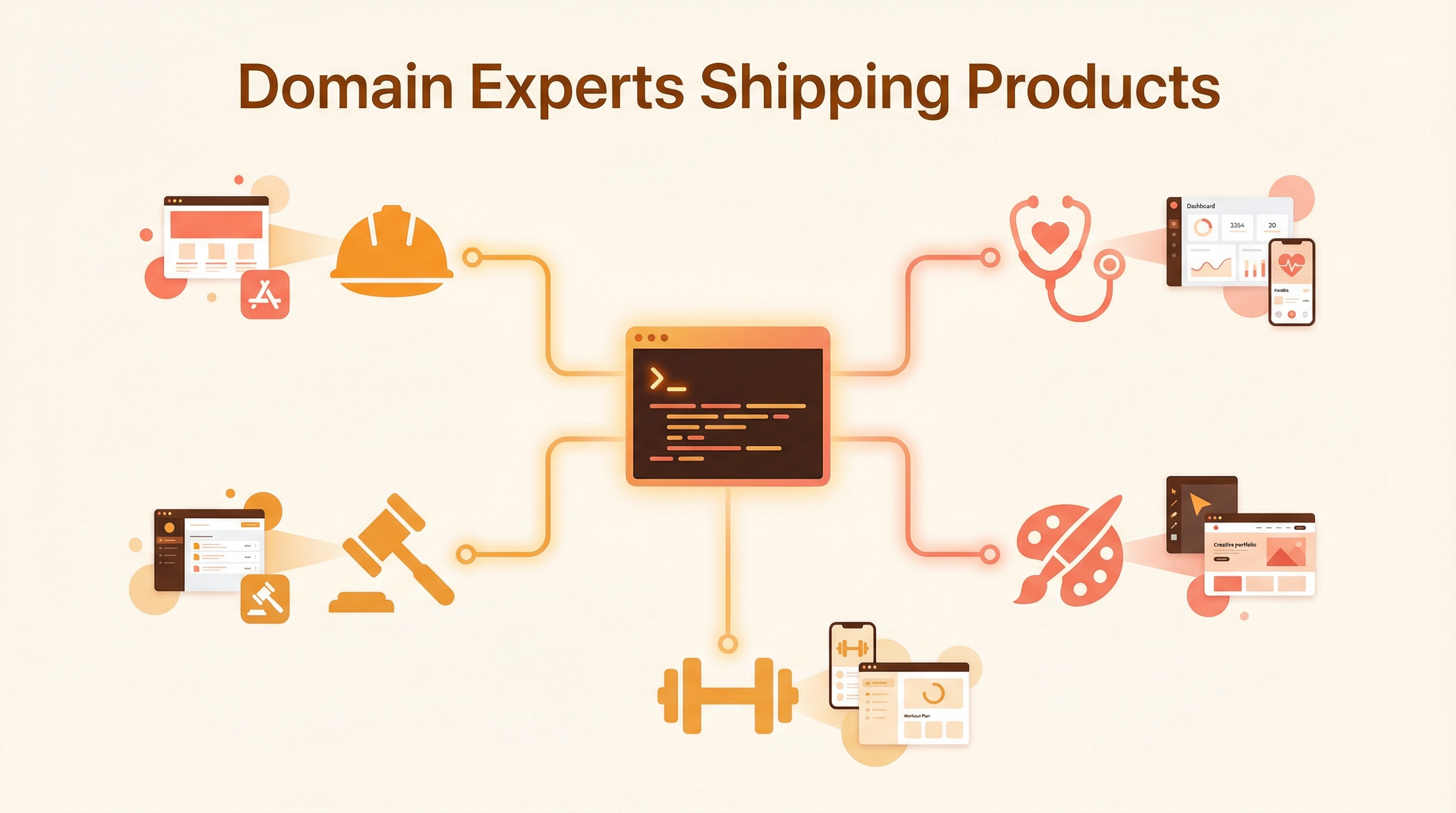
A Reddit thread asked: “What is the most impressive thing you’ve done with Claude?” The answers revealed a pattern nobody expected — the biggest beneficiaries aren’t programmers. They’re domain experts who understand their industry but don’t know syntax. AI is turning them into developers.
| *Source: Reddit: r/ClaudeAI — What is the most impressive thing you’ve done or seen done with Claude? | 爱可可-爱生活 Weibo analysis* |
How LearnAI Team Could Use This
- Treat subject-matter expertise as the starting point for course tools, internal automations, and learner-facing prototypes.
- Pair domain experts with Claude Code workflows so they can ship small utilities without waiting for a full engineering cycle.
- Capture repeated prompts, MCP setups, and CLAUDE.md rules from successful experiments so future projects start with better scaffolding.
Real-World Use Cases
Romanian Father — WordPress Plugin Empire
A father in Romania, no CS degree, never wrote PHP professionally. In fragments of time between his kids’ school and late nights, he used Claude Code with 151 MCP tools to build a WordPress plugin.
| Metric | Value |
|---|---|
| Paying users | 86 |
| Connected sites | 380+ |
| Lines of code | 74,000 |
| Background | No CS degree |
The key insight from his story: AI first builds the scaffolding and toolchain, then uses those AI-built tools to keep building — creating a virtuous cycle that lowers the barrier further with each iteration.
Canadian Political Tracker
Someone built an automated political tracker for Canadian politics. Autonomous scraping of past and present statements by politicians.
| Metric | Value |
|---|---|
| User visits | 2.5 million |
| Timeframe | 36 hours after launch |
| Users | 4 countries, 7 regions |
Construction Site Management
Replaced an existing construction site management system that cost $3 million/year — built from scratch with Claude Code.
Real-Time Public Transit — 11 Malaysian Cities
A real-time public bus tracking system covering 11 cities in Malaysia, running on a €12.6/month VPS. That’s production infrastructure serving real users for the cost of a lunch.
Personal Trainer → Software Developer
A personal trainer who never wrote code is using Claude to reshape their business serving clients on the autism spectrum. Not a tech pivot — a domain expert using AI to build tools for their actual expertise.
16-Year Brand Practitioner
Someone with 16 years in branding used AI to go from brand design to marketing plans to full websites — the entire pipeline, from scratch.
Claude + Codex Dual-Agent Legal Audit
One user combined Claude Code and Codex as dual agents — one writes, one audits — for a legal trial/audit workflow.
The Real Pattern
The Weibo analysis by 爱可可-爱生活 identified the deeper insight:
“This is what AI tools are truly valuable for — not speeding up programmers, but letting people who ‘understand how everything should work but don’t know the syntax’ finally get their hands on the wheel.”
The thread reveals a product census of what’s being built:
| Builder Background | What They Built |
|---|---|
| Father, no CS degree | WordPress plugin (86 paying users) |
| Political wonk | Political accountability tracker (2.5M visits) |
| Construction manager | Site management system (replaces $3M/year tool) |
| Transit enthusiast | Real-time bus tracking (11 cities) |
| Personal trainer | Autism spectrum client management |
| Brand designer | End-to-end marketing platform |
| Legal professional | Dual-AI audit workflow |
None of these people would have described themselves as “developers” before Claude Code.
What Actually Works (and What Doesn’t)
The thread’s second-highest reply was just four words: “a plan concept.” And someone summarized their output as “a pile of unfinished projects and a hundred READMEs.”
Success rate is lower than the highlights suggest. The honest wisdom from the thread:
“AI writes the code, you’re responsible for being stubborn. Prompt the words out, publish, find bugs, rewrite, find the architecture is wrong, rebuild, restructure, rewrite 47 times, and then suddenly it works. It’s not ‘prompt once and ship’ — it’s seeing every vulnerability report as a chance to make the product better.”
What Separates Shippers from Quitters
| Shippers | Quitters |
|---|---|
| Domain expertise in what they’re building | “I want to build something cool” |
| Stubborn iteration (47 rewrites) | Expect first prompt to work |
| Use AI-built tools to build more (virtuous cycle) | Treat each session as standalone |
| 151 MCP tools, CLAUDE.md, persistent context | Bare prompting with no infrastructure |
| Ship MVP, get real users, iterate | Perfect the plan forever |
The Virtuous Cycle
The most important technical insight from the Romanian father’s story:
1. AI builds scaffolding / toolchain
         ↓
2. You use AI-built tools to build more
         ↓
3. AI self-creates tools for continued work
         ↓
4. Barrier drops lower with each cycle
         ↓
5. Domain expert ships production software
This is the AI bootstrapping loop — AI doesn’t just write your code, it builds the infrastructure that makes writing more code easier. Each MCP tool, each CLAUDE.md refinement, each custom skill is a ratchet that only moves forward.
The Uncomfortable Question
The thread ended with a question nobody answered:
“When every domain expert can ship products, what is domain knowledge itself worth?”
If a personal trainer can build software, a construction manager can replace a $3M system, and a father with no CS degree can serve 86 paying customers — the moat isn’t technical skill anymore. It’s understanding the problem deeply enough to be stubborn about solving it.