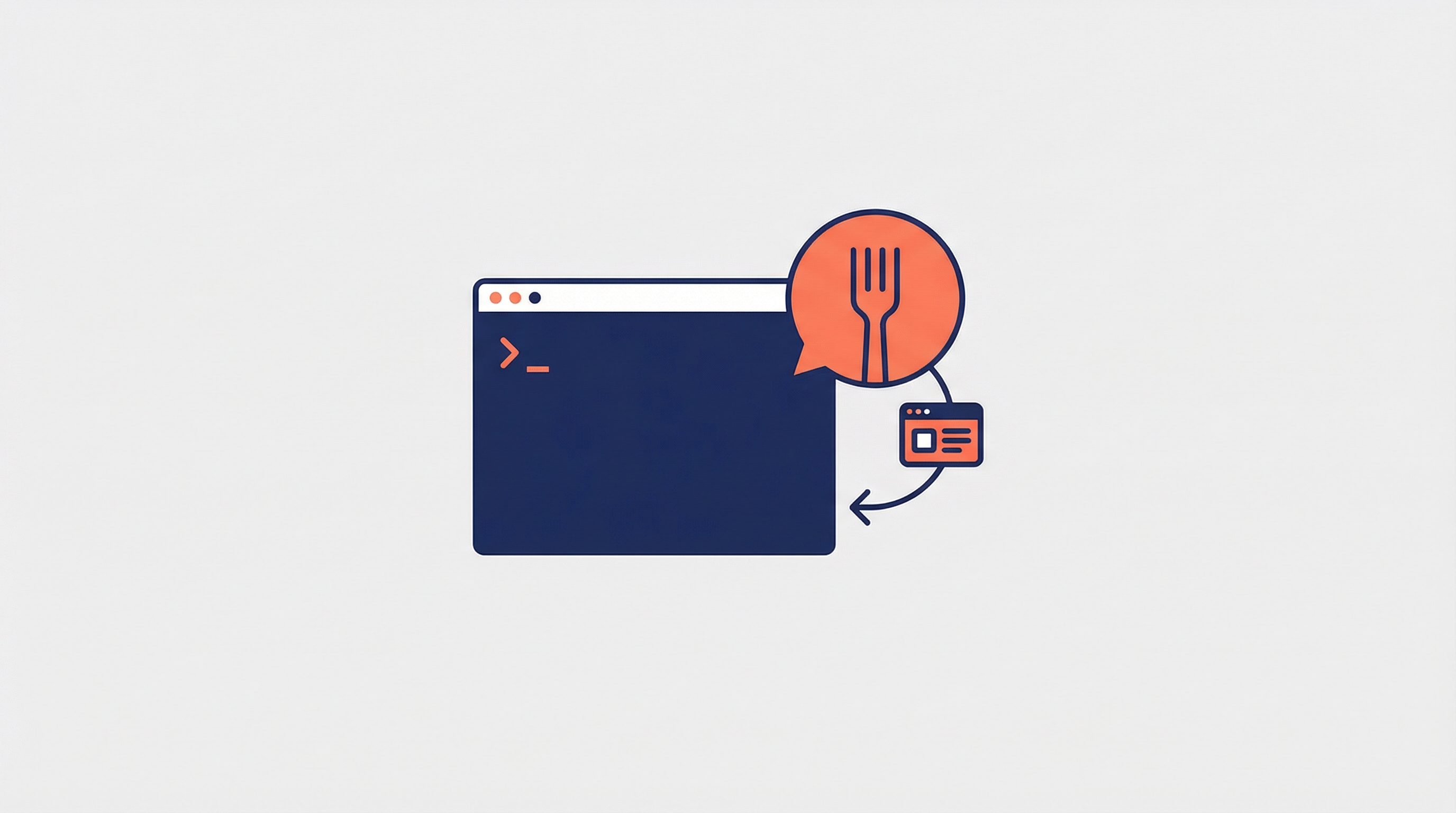
Today I learned you can add context: fork to a Claude Code skill so it runs in a completely isolated subagent — with its own context window. It does the work, returns a summary, and your main conversation stays clean.
Source: Claude Code Skills Documentation
The Problem
Some tasks produce massive output — deep research, large test runs, code analysis across dozens of files. Running these inline floods your main conversation’s context window with verbose intermediate results you don’t need to see.
The Solution: context: fork
Add context: fork to a skill’s frontmatter. The skill runs in its own isolated subagent, does all the heavy lifting privately, and returns only a concise summary to your main conversation.
---
name: deep-research
description: Research a topic thoroughly in the codebase
context: fork
agent: Explore
---

Research $ARGUMENTS thoroughly:

1. Find all relevant files using Glob and Grep
2. Read and analyze the code
3. Trace dependencies and relationships
4. Summarize findings with specific file references
When you invoke /deep-research authentication flow, it:
- Spawns a new Explore subagent with its own context window
- The agent reads dozens of files, runs searches — all in isolation
- Returns a clean summary to your main conversation
- Your main context window is untouched by the intermediate noise
Choosing an Agent Type
The agent field controls which subagent runs the forked skill:
| Agent | Best for | Model | Tools |
|---|---|---|---|
Explore |
Read-only research, codebase analysis | Haiku (fast/cheap) | Read, Grep, Glob |
Plan |
Planning before implementation | Inherited | Read-only |
general-purpose |
Tasks needing both analysis and edits | Inherited | All tools |
How LearnAI Team Could Use This
- Use forked skills for heavy research tasks (literature review, codebase analysis) that would flood the main session.
- Build forked PR summary skills that analyze diffs in isolation and return concise change summaries.
- Create forked security scan skills that audit code without polluting the main conversation with verbose findings.
Real-World Use Cases
Deep Codebase Research
---
name: investigate
description: Deep-dive investigation of a codebase area
context: fork
agent: Explore
---

Investigate $ARGUMENTS in the codebase:

1. Find all related files
2. Trace how the feature is implemented end-to-end
3. Identify dependencies and side effects
4. List any potential issues or tech debt

Provide a structured summary with file:line references.
Usage: /investigate the payment processing pipeline
The Explore agent searches across the entire codebase — reading dozens of files, tracing imports, following function calls — and returns a concise report. Your main conversation only sees the summary.
Test Failure Analysis
---
name: debug-tests
description: Analyze and debug failing tests
context: fork
allowed-tools: Bash, Read, Grep
---

Debug failing tests:

1. Run the test suite: `npm test 2>&1`
2. For each failure:
   - Read the test file
   - Find the implementation being tested
   - Identify the root cause
3. Report:
   - Each failing test with its root cause
   - Suggested fixes
Usage: /debug-tests
Test output can be hundreds of lines. The forked agent processes all of it privately and returns just the diagnosis.
PR Summary
---
name: pr-summary
description: Summarize a pull request
context: fork
allowed-tools: Bash(gh *)
---

Summarize this pull request:

- PR diff: !`gh pr diff`
- PR comments: !`gh pr view --comments`

Generate:
1. What changed and why
2. Potential risks
3. Questions for the author
Usage: /pr-summary
PR diffs can be enormous. The fork absorbs all that context and gives you an executive summary.
Security Audit
---
name: security-scan
description: Scan code for security vulnerabilities
context: fork
agent: Explore
---

Security audit of $ARGUMENTS:

Search for:
- Hardcoded credentials or secrets
- SQL injection vectors
- XSS vulnerabilities
- Missing input validation
- Insecure crypto usage

Report each finding with:
- File and line number
- Severity (critical/high/medium)
- Suggested fix
Usage: /security-scan src/api/
When to Use context: fork
Use it when:
- The task produces verbose intermediate output (research, test logs, diffs)
- You want isolation — the task shouldn’t consume your main context window
- The task is self-contained and returns a summary
- You’re doing something heavy: analysis across many files, log processing, documentation generation
Don’t use it when:
- The task needs back-and-forth refinement with you
- The skill contains guidelines (not a concrete task) — guidelines should be inline, not forked
- You need the forked agent to access context from your current conversation
Where to Put Skill Files
| Location | Scope |
|---|---|
.claude/skills/ |
Project-level — commit to share with team |
~/.claude/skills/ |
Personal — available across all projects |
The context: fork field is the difference between a skill that runs inline (polluting your context) and one that runs in clean isolation (returning only what matters).